

If you are cooling a large bedroom, office, or living area, a portable AC that is undersized or difficult to vent can leave you with a poor fit and extra installation frustration. The Best Dual Hose Portable Air Conditioners for Large Rooms comparison below helps you weigh stated room coverage, inverter design, controls, noise claims, drainage, and window-kit compatibility before choosing.

Pros
- Three operating modes
- Dual-hose design
- Window kit fits vertical and horizontal windows
- Wheels and hidden handles
Cons
- Window compatibility limited to 20.5 to 57.3 inches
- Remote requires two AAA batteries, not included
- Who should skip it: households without a compatible window

Pros
- Three fan speeds and mist settings
- 40-ounce water tank
- Remote control included
- Compact 3-pound design
- Seven LED light colors
Cons
- Cooling depends on room temperature and humidity
- Designed for personal rather than whole-room cooling
- Requires water and optional ice for mist cooling
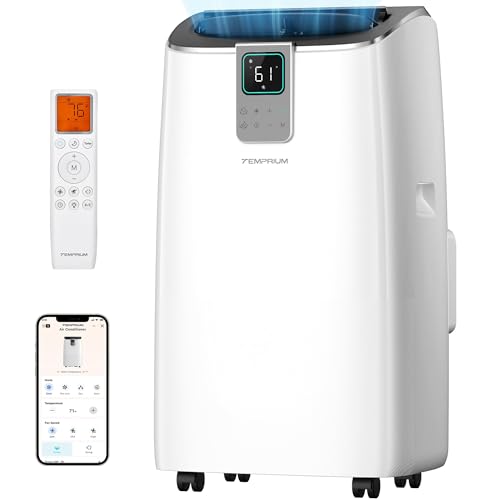
Pros
- Dual-hose design for larger rooms
- Inverter compressor supports steady temperature control
- App and voice control compatibility
- Self-evaporating condensation system
- Eight operating modes
Cons
- 64.8-pound body may be cumbersome to reposition
- Who should skip it: Shoppers needing a lighter unit

Pros
- Cooling and heating modes
- Wi-Fi control
- Washable removable filter
- Dual-hose design
- Smooth casters for mobility
Cons
- 52.8-pound weight limits easy lifting
- Portable setup requires window installation
- Who should skip it: shoppers wanting a lightweight portable unit
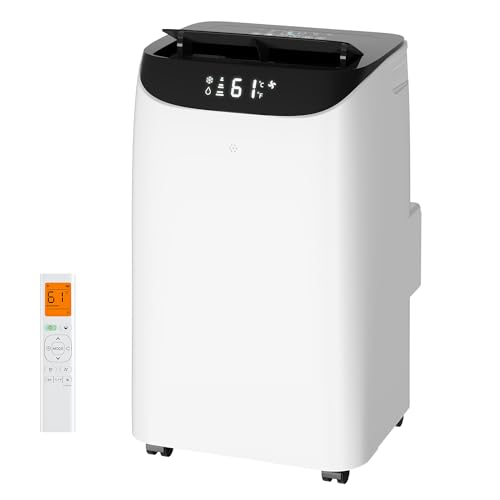
Pros
- Dual-hose airflow design
- Four operating modes
- Remote control included
- Washable filter
- Caster wheels for moving
Cons
- Requires a compatible sliding window
- Manufacturer claims energy savings, not independent results
- Who should skip it: households without suitable window access
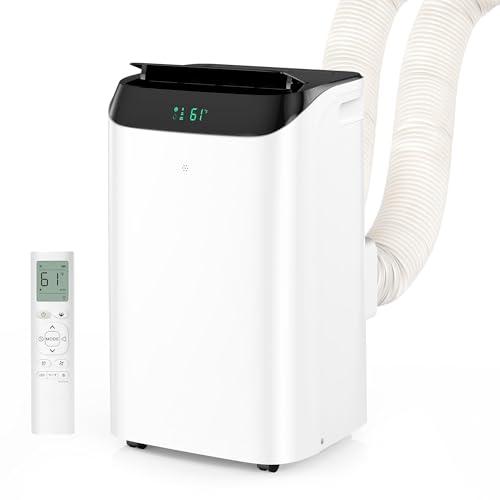
Pros
- Three operating modes
- Remote control and 24-hour timer
- Window kit and exhaust hose included
Cons
- 66 lb unit may be cumbersome to move
- Humid rooms may require draining every eight hours
- Who should skip it: users unwilling to drain in humid rooms

Pros
- Dual-hose airflow design
- Three operating modes
- Remote control included
- Washable, tool-free filters
- Built-in wheels and handles
Cons
- Weighs 61 pounds
- Window kit requires installation
- Humid use may require drainage

Pros
- Cooling, fan, and dehumidifier modes
- Dual-hose system
- Wi-Fi app and remote control
- Adjustable timer and fan speeds
Cons
- Weighs 49 pounds
- No room-size guidance is provided
- Who should skip it: shoppers needing a lighter unit or room-size guidance

Pros
- Dual-hose airflow design
- Inverter technology
- Three operating modes
- Quiet sleep mode
- Remote and timer controls
Cons
- Continuous draining required in dry mode
- Continuous draining above 85% cooling humidity
- 65-pound unit may be cumbersome to move
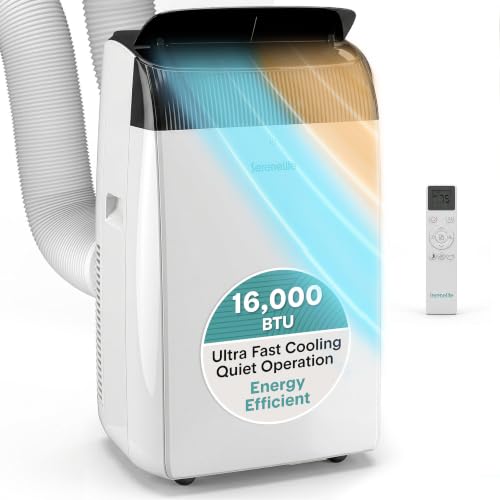
Pros
- Cooling and heating modes
- Includes window vent kit
- Remote control and 24-hour timer
- Rolling wheels for repositioning
Cons
- Weighs 49 pounds
- Who should skip it: shoppers seeking a lightweight unit
Match stated cooling capacity to your room
Coverage claims range across these listings, and they should be treated as manufacturer guidance rather than a guarantee for every room. The 16,000 BTU ASHRAE models from AGTANA, Tanoxo, and HUMHOLD state coverage up to 800 square feet; the DOMANKI listing says up to 850 square feet. The Temprium lists up to 750 square feet, while the 14,000 BTU SereneLife and HUMHOLD models cite up to 650 and 700 square feet, respectively.
Room layout, sun exposure, ceiling height, insulation, and heat sources can affect the result. Check the product’s SACC rating as well as its ASHRAE figure where both are provided: several 16,000 BTU listings specify 12,000 BTU SACC. Use the room’s approximate area as a first filter, then confirm the unit’s ratings and your room conditions.
Understand the dual-hose and inverter trade-off
In a dual-hose design, one hose brings in outdoor air and another exhausts hot air. That arrangement is intended to reduce the pressure imbalance associated with single-hose units. Several listings also pair it with variable-speed inverter operation, which adjusts compressor speed instead of relying only on repeated full-speed starts.
Manufacturers claim energy savings for some models, but those figures are not independent comparisons and real consumption depends on operating conditions. If stable temperature control and efficiency features are priorities, compare the inverter claims and available efficiency information. Do not assume that a larger BTU number alone guarantees a better fit.
Measure the window and plan the hose route
Portable units still need a suitable window for the exhaust setup. AGTANA specifies a window-kit range of 20.5 to 57.3 inches, while DOMANKI says its kit fits standard windows up to 60 inches wide. Other listings mention kits for sliding windows but do not provide a fit range in the supplied details.
Measure the opening and consider where the unit will sit, how the hose reaches the window, and whether furniture or a walkway will be obstructed. Verify the exact window orientation and kit dimensions for the model you select. For more category-specific options, see our cooling appliance guides.
Compare noise claims with your daily routine
Noise can matter as much as cooling in a bedroom or home office. Temprium lists operation as low as 40 dB in Silent Mode; AGTANA and DOMANKI state 42 dB in Sleep Mode, and the Tanoxo claims below 45 dB. SereneLife’s 14,000 BTU model lists 44 to 49 dBA, while its 16,000 BTU model lists 42 to 49 dBA.
These are listed claims, not measurements made under a shared comparison method. Look at the stated quiet mode, not only the headline figure, and remember that fan speed and room conditions may affect perceived sound. If you need overnight operation, consider a model with a sleep setting and a timer, and check how the display and controls behave in that mode.
Account for moisture and maintenance
Self-evaporating systems can reduce routine water handling in cooling mode, but they do not make every use situation drain-free. Tanoxo and HUMHOLD note that humid environments or Dry mode may require drainage; AGTANA specifies a drain hose for continuous dehumidifying. SereneLife listings describe dehumidifier modes but do not provide detailed drainage conditions in the supplied information.
If you expect to run dehumidification often, verify the continuous-drain arrangement and whether the drain outlet can reach a suitable location. Also check filter access: DOMANKI, Tanoxo, and HUMHOLD describe removable, washable filters. Regularly follow the model’s care instructions rather than assuming all maintenance is identical.
Choose controls and extra modes you will use
Remote controls and timers are common among these units, while smart features vary. Temprium lists app and voice control and eight operating modes; the SereneLife 14,000 BTU models specify Wi-Fi control. The 16,000 BTU SereneLife listing adds heating, as does its stated 11,000 BTU heating capacity, while many other options focus on cooling, fan, and dehumidifying.
Choose connected controls if remote scheduling or voice commands fit your routine, but verify app compatibility and network needs in the current listing. Heating can broaden seasonal use, though the supplied details do not establish performance for every climate. Avoid paying attention to a mode count unless those functions solve a real household need.
How We Compared These Products
This guide compares the supplied product specifications and listing descriptions, including stated capacity, coverage, hose design, inverter features, controls, noise claims, drainage notes, and window-kit information. No firsthand evaluation is documented, so recommendations are based on product research rather than direct use. Customer feedback supplied no substantive review evidence for these models.
Which Option Fits Your Room?
For a large room with app or voice control in mind: The Temprium 16,000 BTU Inverter Dual Hose lists coverage up to 750 square feet, a 40 dB Silent Mode claim, Wi-Fi app access, and Alexa and Google Assistant compatibility. Its listed coverage is below some 800 to 850 square-foot options, so compare the room size and verify the control features before deciding. Who should skip it: shoppers with a room that exceeds its stated coverage or who do not want connected controls.
For a higher stated coverage figure: The Inverter 16000 BTU Portable Air Conditioner from DOMANKI lists coverage up to 850 square feet, a washable filter, sleep mode, and a window kit for standard windows up to 60 inches wide. The 850-square-foot claim is not a promise for every room, so confirm your room conditions and window fit. Who should skip it: buyers whose window opening falls outside the listed kit fit or who want smart-app control, which the supplied description does not mention.
For a smaller stated coverage target with heating: The SereneLife 14,000 BTU Dual Hose Portable Inverter lists coverage up to 650 square feet, Wi-Fi, and cooling, heating, fan, and dehumidifying modes. This can suit someone who values multiple modes, but it is not the highest-coverage choice here. Who should skip it: shoppers cooling a space beyond its stated coverage or seeking a listed 16,000 BTU cooling model.
Frequently Asked Questions
Are dual-hose portable air conditioners better for large rooms?
A dual-hose design uses separate intake and exhaust paths, which is intended to help maintain balanced airflow compared with a single-hose setup. Performance still depends on capacity, room conditions, and correct installation, so compare the listed ratings rather than relying on hose count alone.
How do I know whether a model can cool my room?
Estimate your room area and compare it with the manufacturer’s stated coverage, then account for factors such as direct sun and room layout. When both ASHRAE and SACC ratings are listed, consider both rather than treating the larger figure as the only measure.
Will the window kit fit my window?
Not necessarily. Window types and dimensions differ, and only some listings provide a specific fit range. Measure your window and confirm the kit supports its orientation and opening size before purchase.
Do self-evaporating portable ACs need to be drained?
They may need drainage in high humidity or during dehumidifying operation. The Tanoxo and HUMHOLD descriptions identify conditions that can require draining, so check each model’s instructions and plan for a drain hose if your use is likely to produce more condensate.
Can I use a portable AC in a bedroom overnight?
Several listed models include Sleep or Silent modes and timers. Their noise figures are manufacturer claims, so consider the specific mode and your own sensitivity to sound; the supplied product details cannot establish how quiet a unit will feel in your room.
Do these models also heat?
The supplied description for the SereneLife 16,000 BTU Dual Hose Inverter specifies heating as well as cooling. Do not assume that other models provide heat unless the listing for that exact model says so.
Are compact evaporative coolers a substitute for these units?
No. The Nicezhiyu Portable Air Conditioenrs listing describes a small water-tank evaporative cooler for personal use, not a dual-hose compressor AC with stated large-room coverage. It may be relevant for a desk or nearby personal airflow, but it is not a like-for-like solution for cooling a large room.






Write Your Review
No reviews yet. Be the first to share your experience!