

If your apartment has room for a small dryer but no practical way to route exhaust outdoors, check the ventilation details before choosing a model. Several dryers in this comparison are described as portable, but the listings identify some as vented or include an exhaust hose, so the word “compact” alone does not confirm that a dryer is ventless. This guide to Best Compact Electric Ventless Clothes Dryers for Apartments helps you compare size, load capacity, controls, and installation needs before giving up floor space.

Pros
- Compact dimensions for small living spaces
- Four automatic drying modes
- Forward and reverse tumbling
- Stainless steel drum
- Wall-mounting option
Cons
- Limited to 12-pound wet loads for quicker drying
- Requires a 110V or 120V outlet
- Who should skip it: Households needing larger full-size loads

Pros
- Four selectable drying modes
- 1.8-cubic-foot laundry capacity
- Compact wall-mountable design
- Stainless steel drum
- Automatic door-open pause
Cons
- May not suit larger household loads
- Who should skip it: households needing a full-size dryer

Pros
- Four drying modes
- Forward and reverse tumbling
- Wall-mountable design
- Transparent door window
- One-year warranty
Cons
- Wet loads should stay under 26 pounds
- Weighs 55.1 pounds
- Better suited to smaller loads
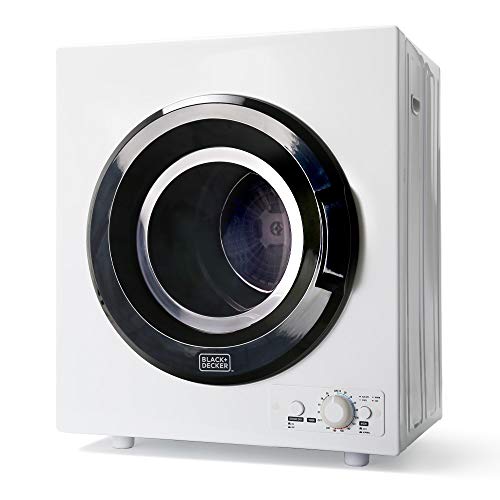
Pros
- Compact footprint for smaller spaces
- 13.2-pound laundry capacity
- Four selectable drying modes
- Standard 120V three-prong plug
- Stainless steel drum
Cons
- Vented design requires hose and exhaust connection
- Drying times range from 30 to 200 minutes
- Who should skip it: households needing an unvented dryer
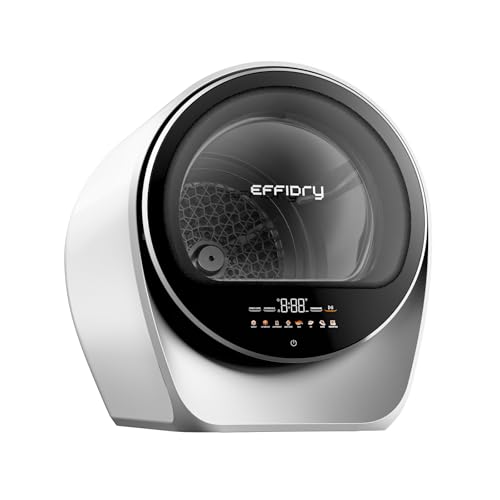
Pros
- Compact 1.0 cu. ft. capacity
- Eight listed drying modes
- No drainage or installation required
- Includes a shoe-drying shelf
Cons
- Limited 1.0 cu. ft. capacity may not suit larger loads
- Who should skip it: households needing a full-size dryer

Pros
- Four drying modes
- Adjustable Strong and Soft heat
- Dual filtration system
- Auto-shutoff and overheat protection
- Portable 3.5-cubic-foot capacity
Cons
- Not suited to shoppers needing larger capacity
- Requires 110 to 120V electrical service
- Who should skip it: shoppers needing a different voltage

Pros
- Compact footprint for apartments, dorms, and RVs
- Four automatic drying modes
- Forward and reverse tumbling
- Wall-mountable design
- One-year warranty included
Cons
- Wet loads should stay within 10 pounds
- Designed primarily for smaller laundry loads
- Who should skip it: Households needing large-load drying

Pros
- Compact footprint for limited laundry spaces
- Four drying modes
- 120V standard three-prong plug
- Stainless steel drum
- Wall-mounting hardware included
Cons
- 2.65-cubic-foot capacity may limit larger loads
- Requires safe airflow and should not sit in enclosed cabinets
- Who should skip it: Households needing larger-capacity laundry loads
Pros
- Compact footprint for small spaces
- Standard-outlet electrical connection
- Multiple drying modes
- Stainless steel drum
Cons
- Cycles may take up to 200 minutes
- Requires venting
- Who should skip it: households needing larger loads or faster cycles

Pros
- Compact dimensions for apartments and dorms
- Stated capacity up to 13.2 lb
- Touch controls offer multiple modes and temperatures
Cons
- Cycle details and installation requirements are not specified
- Who should skip it: households needing a larger dryer
Confirm venting and installation requirements
Venting is the first decision, not a minor detail. The BLACK+DECKER 3.5 Cu. Ft. Portable Dryer and 2.65 Cu. Ft. Portable Dryer listings specify a 4-inch vent hose and exhaust connector. The Feelfunn models list an exhaust pipe fitting, while the Euhomy 2.65 Cu. Ft. Portable Dryer listing also includes an exhaust connector. These details indicate that you should plan for exhaust routing, rather than assume the units operate ventlessly.
Before ordering, ask the seller or check the product manual for the exact ventilation method and required clearances. A dryer that needs an exhaust route may not suit a closet or room where venting is prohibited. For more appliance options, browse the site’s laundry category.
Match capacity to your washer and typical loads
Capacity affects how often you need to split laundry into batches. The supplied listings range from the Effidry S3 at 1.0 cu. ft. to several 3.5-cu.-ft. models. Feelfunn’s 1.8-cu.-ft. 1020W model advises limiting wet loads to 12 lb for quicker drying; its 850W model gives a 10-lb wet-load limit. Those stated limits are more useful for planning than assuming a compact drum can take a full washer load.
For frequent towels, sheets, or household laundry, compare a larger drum with your washer’s typical load size, while remembering that larger capacity does not establish a particular drying time. The Effidry’s 1.0-cu.-ft. capacity is a more space-conscious option for smaller batches, but it means less room for bulky loads.
Measure the footprint and plan the placement
Check the listed dimensions against the intended floor, shelf, or laundry nook, and leave room for the door and airflow. The Feelfunn 850W model measures 19.5 x 16.1 x 23.8 inches, while the Euhomy 2.65-cu.-ft. listing gives dimensions of 17.6 x 23.6 x 27 inches. These figures describe different orientations, so verify which dimension is width, depth, and height in the manual before planning a tight fit.
Some listings describe wall mounting, including the Feelfunn units and the ROVSUN 3.5 Cu.Ft Portable Clothes Dryer. That does not establish that every wall or mounting location is suitable. Confirm the mounting instructions, supplied hardware, and safe clearances before choosing an elevated placement.
Compare settings and control style
Simple controls can make routine loads straightforward, while more modes may help when you separate fabrics or want a less aggressive setting. Several models offer knob controls and four modes; the BLACK+DECKER 2.65 Cu. Ft. model lists five options, including ECO and Sensor Dry. The Euhomy 2.65-cu.-ft. model lists Strong, Intelligent, ECO, and Normal modes, with humidity sensing described for some settings.
Touch controls may appeal if you prefer a display: the Feelfunn 3.5-cu.-ft. and ROVSUN 3.5-cu.-ft. models list touch interfaces. Choose based on settings you will use, not the number of buttons. Sensor features and mode names are listing claims; check the manual to understand what each cycle does for your fabrics.
Account for cleaning and routine care
Lint-filter access matters because regular cleaning is part of dryer ownership. The Feelfunn 1020W listing describes a multi-filter system, and the Euhomy 2.65-cu.-ft. listing says its multilayer filter captures lint and pet hair. The Kaelara listing recommends cleaning or replacing its lint screen every two to three uses. Follow the model’s manual for filter care, exhaust cleaning, and any other maintenance.
Do not treat a filter description as proof that lint maintenance is unnecessary. If you want an appliance that is easy to care for in a small apartment, check how the filter is removed and whether the exhaust components can be accessed where you plan to place the dryer.
Check the electrical connection and load guidance
Most of these listings specify 110V, 115V, or 120V operation, but they do not all provide identical electrical details. The BLACK+DECKER models specify a three-prong plug for a standard outlet, and the Euhomy 2.65-cu.-ft. listing describes a 120V three-prong plug. Confirm the exact model’s requirements and the outlet arrangement before purchase, particularly if the dryer will share a compact laundry area with other appliances.
How We Compared These Products
This comparison is based on the supplied product listings, including stated capacity, dimensions, electrical details, controls, venting accessories, and maintenance features, along with the customer-feedback information provided. No firsthand use is documented, so we do not make independent claims about drying speed, noise, or long-term reliability. Product descriptions can vary in detail or contain inconsistencies, so confirm critical fit and installation information with the manufacturer’s instructions before buying.
Which Option Fits Your Apartment?
For very limited floor space and small loads: The Effidry S3 Compact Clothes Dryer 1.0 cu.ft has the smallest stated capacity in this group. Its listing describes multiple drying modes and a shoe-drying function, but it offers less drum volume than the 2.65- and 3.5-cu.-ft. options. Who should skip it: households that regularly dry larger loads or bulky bedding.
For a larger stated capacity: The Feelfunn 3.5 Cu. Ft. Portable Clothes Dryer lists a 3.5-cu.-ft. drum, 1500W power, and four modes, with a touch control panel. Its listing also gives a 55.1-lb. weight and wall-mounting as an option, so check available space and mounting suitability. Who should skip it: anyone who cannot accommodate the footprint or confirm the required exhaust arrangement.
For sensor-based cycle options: The BLACK+DECKER 2.65 Cu. Ft. Portable Dryer lists Sensor Dry and ECO modes, as well as a 4-inch vent hose. That combination may suit someone who wants automatic moisture sensing in a smaller-capacity model, but it is explicitly described as vented. Who should skip it: apartment residents who require a confirmed ventless dryer or cannot route exhaust.
For every option, resolve the venting question first. A portable dryer that requires exhaust may not meet a ventless requirement, even if its footprint fits your apartment.
Frequently Asked Questions
Are these dryers ventless?
The supplied information identifies vent hoses or exhaust fittings for several models, including both BLACK+DECKER dryers. The listings do not clearly establish that every product is ventless. Confirm the exact model’s exhaust method with its manual or seller before buying.
Can a compact dryer plug into a regular apartment outlet?
Several listings specify 110V or 120V operation, and the BLACK+DECKER models describe a three-prong plug. Electrical details are model-specific, so check the product label and manual and make sure the required outlet is available where the dryer will sit.
Which capacity is suitable for a small household?
It depends on how much laundry you wash at once and what you need to dry. The 1.0-cu.-ft. Effidry is suited to smaller batches by capacity, while 2.65- and 3.5-cu.-ft. models provide more drum volume. Compare wet-load guidance and your washer’s usual load size rather than relying on capacity alone.
Can these dryers be wall-mounted?
Some listings describe wall mounting, including the Feelfunn models and ROVSUN 3.5-cu.-ft. model. Do not assume that all models support it or that a particular wall is appropriate. Verify mounting instructions, hardware, and clearances for the exact product.
How often should I clean the lint filter?
Follow the instructions for your model. The Kaelara listing recommends cleaning or replacing its lint screen every two to three uses, but that guidance should not be transferred to other dryers. Check each manual for filter and exhaust maintenance.
Can a compact dryer handle sheets and towels?
Some listings mention sheets and towels as intended items, including the BLACK+DECKER 3.5-cu.-ft. model and ROVSUN 3.5-cu.-ft. model. The actual fit depends on the load size and drum space. Avoid overloading and check the model’s load guidance, especially for bulky items.






Write Your Review
No reviews yet. Be the first to share your experience!