

If your bathroom stays damp after showers but has little floor space, the wrong dehumidifier can be awkward to place or require more frequent emptying than you expect. This guide to Best Small Bathroom Dehumidifiers compares compact electric models with passive moisture absorbers, so you can weigh room size, water collection, noise, power needs, and upkeep.

Pros
- Reusable refillable tank
- No power required
- Silent operation
- Water-level window and pour spout
Cons
- Requires periodic tank emptying
- Tablet lifespan varies with room conditions
- Who should skip it: shoppers needing powered dehumidification

Pros
- No electricity, batteries, or plug required
- Silent operation for bedrooms and offices
- Refillable water tank reduces disposable waste
- Compact and portable design
- Easy-pour spout and water-level window
Cons
- Moisture collection varies with room conditions
- Requires replacement tablets after the included tablet dissolves
- Skip it if you need whole-room dehumidification


Pros
- 44 oz water tank
- Automatic full-tank shutoff alert
- Four timer settings plus continuous mode
- Compact footprint
- Three operating modes
Cons
- Listed for spaces up to 260 sq. ft.
- Who should skip it: households needing coverage beyond the stated room size

Pros
- Manual or continuous drainage options
- Automatic shutoff when the tank is full
- Lightweight with a lift-up handle
Cons
- Removal performance falls below 59°F or 35% humidity
- Who should skip it: shoppers needing strong moisture removal in cool or dry rooms

Pros
- Transparent, quick-release water tank
- Automatic shutoff when tank is full
- Sleep mode rated at 25 dB
- Compact 5.5-inch-square footprint
Cons
- Up to 300 ml daily removal under specified conditions
- Who should skip it: households needing higher-capacity moisture removal
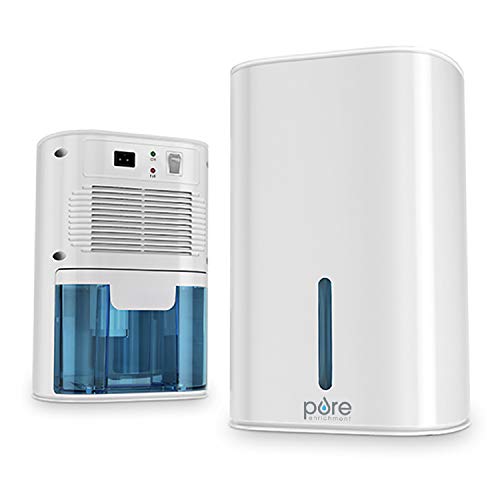
Pros
- Transparent 27-ounce tank
- Automatic full-tank shutoff
- Simple on/off operation
- Compact dimensions
Cons
- Limited to a stated 300 mL daily removal rate
- Who should skip it: buyers needing higher-capacity moisture removal
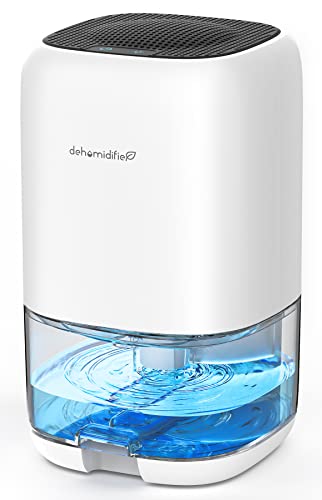
Pros
- Compact footprint with a built-in handle
- Transparent tank and automatic shutoff
- Separate control for the color light
Cons
- Limited to small-space moisture removal
- Who should skip it: households needing high-volume dehumidification

Pros
- No electricity required
- Includes 24-ounce granule refill
- Suitable for spaces up to 248 square feet
- Integrated one-liter level indicator
- Compact 6-by-6-by-8.6-inch tower design
Cons
- Requires granule replenishment over time
- Not suited to shoppers seeking powered dehumidification
- Who should skip it: households needing active, powered moisture removal

Pros
- Hangs in enclosed spaces
- Visible moisture reservoir
- Ten bags per pack
Cons
- No replacement interval specified
- Not a powered room dehumidifier
How to Choose Best Small Bathroom Dehumidifiers
Electric unit or passive absorber?
Electric dehumidifiers use power and collect moisture in a tank, with some listings specifying fan modes, auto shutoff, or a drain hose. They are the more feature-rich choice when you want active collection, but they need an outlet and a suitable place to sit. Passive absorbers need no electricity and make no operating noise, but they offer fewer controls and require attention to the collected liquid or spent refill material.
The Pro Breeze Osmo is a refillable absorber with a tablet, tank, level window, and pour spout. BonAura uses granules and includes a level indicator and spout, while Vacplus consists of hanging bags intended for closets and other enclosed spaces. Consider a passive design for a small enclosed area or when you cannot place a powered appliance; consider an electric unit when its listed controls and collection setup fit your routine.
Room size and moisture-removal claims
Coverage figures and daily collection claims are not directly comparable unless the conditions are alike. For example, the Windangel listing specifies up to 11.8 ounces in 24 hours under 86°F and 80% relative humidity, while the TABYIK listing gives up to 16 ounces under the same stated conditions. Those are manufacturer specifications, not a guarantee of what either unit will collect in your bathroom.
Other listings describe different coverage or conditions: Levoair specifies up to 650 square feet and up to 35 ounces per day at 86°F and 80% relative humidity, while Lonxfy specifies up to 300 milliliters daily under those conditions and a 30 to 350-square-foot range. Compare the stated conditions with your room and dampness problem, and verify whether the listed coverage is appropriate rather than assuming a small appliance will control moisture throughout a larger space.
Tank size, emptying, and drainage
A larger tank can reduce how often you need to pour out water, but tank capacity is not the same as daily removal. The product listings include tanks from TABYIK’s 35-ounce size to Newo and Windangel’s 44-ounce tanks, Lonxfy’s 57-ounce tank, and Levoair’s 68-ounce tank. How often you empty one depends on collection and room conditions.
Levoair is the listed electric option with a 5-foot drain hose for continuous drainage, which may suit a placement near an appropriate drain. Verify that the hose can reach and that the unit can be positioned as its instructions require. Other electric options describe removable tanks and auto shutoff when full, which avoids relying on unattended overflow but still means you must empty the reservoir.
Footprint, placement, and bathroom conditions
Check the appliance dimensions against the shelf, counter, or floor area you can spare, and leave access to the tank and controls. Newo lists dimensions of 6.56 by 4.94 by 9.29 inches; Windangel lists 5.91 by 5.91 by 8.46 inches and a weight of 2.6 pounds. Dimensions are not supplied for every product, so check the current listing and manual before choosing a spot.
Bathroom humidity and temperature can affect performance. Levoair states that dehumidification is less effective below 59°F or below 35% humidity, and recommends temperature above 59°F and humidity above 40%. Keep placement practical: a unit should not block access, and you should follow its manufacturer instructions for use around water and electrical outlets. For broader household options, browse our air care appliance category.
Noise, controls, and upkeep
If the bathroom is near a bedroom, listed noise and operating modes may matter. Windangel offers sleep, normal, and performance modes; Newo also lists three modes and claims below 28 dB in sleep mode. Lonxfy specifies 25 dB in sleep mode measured at 1 meter, while TABYIK lists 28 dB. These are product claims, and sound at home can vary with placement and surroundings.
For maintenance, check how the tank comes out and whether the absorber requires replacement tablets or granules. The Osmo is refillable but uses a tablet; BonAura includes granules, and Vacplus bags are single-use moisture-collecting bags. An electric unit with a simple removable tank may suit you if you prefer to empty water rather than manage refills.
How We Compared These Products
This comparison is based on the supplied product listings, including stated collection capacity, tank or absorber design, coverage claims, dimensions where available, controls, and maintenance details, along with the limited customer-feedback information provided. We did not conduct firsthand product evaluations. Treat advertised collection rates and room coverage as manufacturer claims, and confirm current specifications and instructions before buying.
Which Option Fits Your Bathroom?
For a compact electric unit with modes and timers: The Windangel 44oz(1.3L) Small Dehumidifier for Home lists three operating modes, four timer settings, auto shutoff, and a 44-ounce tank. Its listing specifies a 215-square-foot room range. Who should skip it: someone who needs a continuous drain hose or does not want a powered unit.
For a larger reservoir and drainage option: The Dehumidifier 68oz(2000ml) has a listed 68-ounce tank and includes a 5-foot drain hose. That setup may reduce manual emptying if you can arrange suitable hose placement. Who should skip it: anyone who cannot accommodate its hose or wants a passive, no-power absorber.
For silent operation without an outlet: The Pro Breeze Osmo Moisture Absorber needs no electricity and is listed as silent, with a refillable tank and included tablet. Who should skip it: someone seeking fan-driven collection, selectable modes, or a timer. For hanging storage, Vacplus offers a different bag-style design, but the listing describes it for closets and enclosed spaces rather than as a powered room appliance.
Frequently Asked Questions
Can a small dehumidifier handle a bathroom?
It depends on the room and the moisture load. Check the stated coverage and collection claims, then compare them with your bathroom size and conditions. A small unit may need frequent emptying if it collects water quickly.
Do passive moisture absorbers need electricity?
No. The Pro Breeze Osmo and BonAura are non-electric designs, and Vacplus uses hanging bags. They do not offer powered modes, and their refill or replacement needs differ from emptying an electric unit’s tank.
Does tank capacity tell me how much water a unit removes each day?
No. Tank capacity is how much water the reservoir can hold; daily removal is a separate specification. Actual collection also depends on conditions, so do not use tank size alone to compare performance.
What does auto shutoff do?
On the listed electric models that include it, the unit stops when its tank reaches the full level and provides a light reminder. You still need to empty the tank before it can collect more water.
Can I use a dehumidifier in a cold bathroom?
Check the product’s stated operating conditions. Levoair says performance is reduced below 59°F, while Lonxfy lists smart defrost operation at 59°F. These statements do not establish suitability for every cold or damp bathroom.
How should I choose between a tank and a drain hose?
A tank is straightforward when you can check and empty it. A drain hose may reduce manual emptying, but only if the hose can be routed appropriately. Levoair is the product in this comparison whose listing specifies a 5-foot hose.
Are the listed room-coverage figures guarantees?
No. They are listing specifications, and performance depends on temperature, humidity, room layout, and other conditions. Use them as comparison points, not as a guarantee that the unit will maintain a particular humidity level in your bathroom.






Write Your Review
No reviews yet. Be the first to share your experience!